Wondering if you can get suburban space without giving up transit access? In Owings Mills, that balance is more realistic than many buyers expect. If you want a neighborhood where rail, shopping, dining, and daily errands can fit into your routine, this guide will help you understand where transit-friendly living is strongest and where a car still plays a bigger role. Let’s dive in.
Why Owings Mills Stands Out
Owings Mills is more transit-friendly than many suburban communities in Baltimore County. Metro SubwayLink serves Owings Mills and continues through downtown Baltimore stops like Charles Center, Lexington Market, and Shot Tower on the way to Johns Hopkins. That gives you a practical option if you want to reduce your driving or simplify a daily commute.
Owings Mills is also positioned along the Reisterstown Road and I-795 corridor, about four miles outside the Baltimore Beltway. Baltimore County identifies it as a major employment center with roughly 35,600 residents, more than 1,600 businesses, and more than 23,000 workers arriving daily. In other words, this is not just a bedroom suburb. It is an active hub with jobs, services, and regional connections.
Best Area for Metro Access
Metro Centre and Town Center
If your goal is the most transit-oriented part of Owings Mills, start with Metro Centre and the Owings Mills Town Center area. Baltimore County planning describes this district as the mixed-use downtown of the Owings Mills growth area, and the project adjoins the Metro stop. That proximity matters if you want to live near rail instead of driving to it.
This part of Owings Mills brings together apartment communities, offices, retail, the Baltimore County Public Library, and CCBC Owings Mills in one concentrated area. Apartment communities in the core include The Willard, The Met, and Metro Crossing. For many buyers and renters, this is the strongest car-light option in Owings Mills because so many daily needs are clustered close together.
The library adds more day-to-day convenience than you might expect from a suburban station area. The Owings Mills Branch of Baltimore County Public Library is located at the County Campus Metro Centre at Owings Mills and offers free garages, meeting rooms, public computers, study rooms, and Wi-Fi. When you combine those services with nearby transit, shops, and campus resources, the station area feels more functional for everyday life.
What Daily Life Looks Like Here
Living near Metro Centre can make routines simpler. You may be able to walk to the Metro, stop by the library, run a few errands, and meet friends for a meal without needing to drive for every step. That is a meaningful lifestyle difference compared with more spread-out suburban areas.
This does not mean every address in Owings Mills offers the same experience. The transit-friendly pattern is strongest in the station core, where mixed-use development is concentrated. If walkability is high on your list, this is the area you will want to prioritize.
Best Area for Errands and Dining
Foundry Row and Painter’s Mill
If you want transit access paired with a strong errands-and-dining setup, Foundry Row deserves a close look. Located at Reisterstown Road and Painter’s Mill Road, it is accessible from both I-695 and I-795 and sits a short walk from the Owings Mills Metro Station. That makes it a practical option for people who want both mobility and convenience.
Foundry Row includes a dense retail mix with 14 dining options and more than 35 shops and services. It also includes Wegmans and housing such as Avalon Foundry Row. For many people, this corridor works well because it combines groceries, meals, services, and nearby transit in one area.
This part of Owings Mills is especially appealing if your ideal routine includes quick errand runs and flexible meal options close to home. Rather than thinking of it as only a shopping center, it helps to see it as part of the broader transit-friendly station corridor. That is what gives the area more staying power for daily living.
Neighborhoods Beyond the Station Core
New Town, Deer Park, Garrison, McDonogh, and Academy Lane
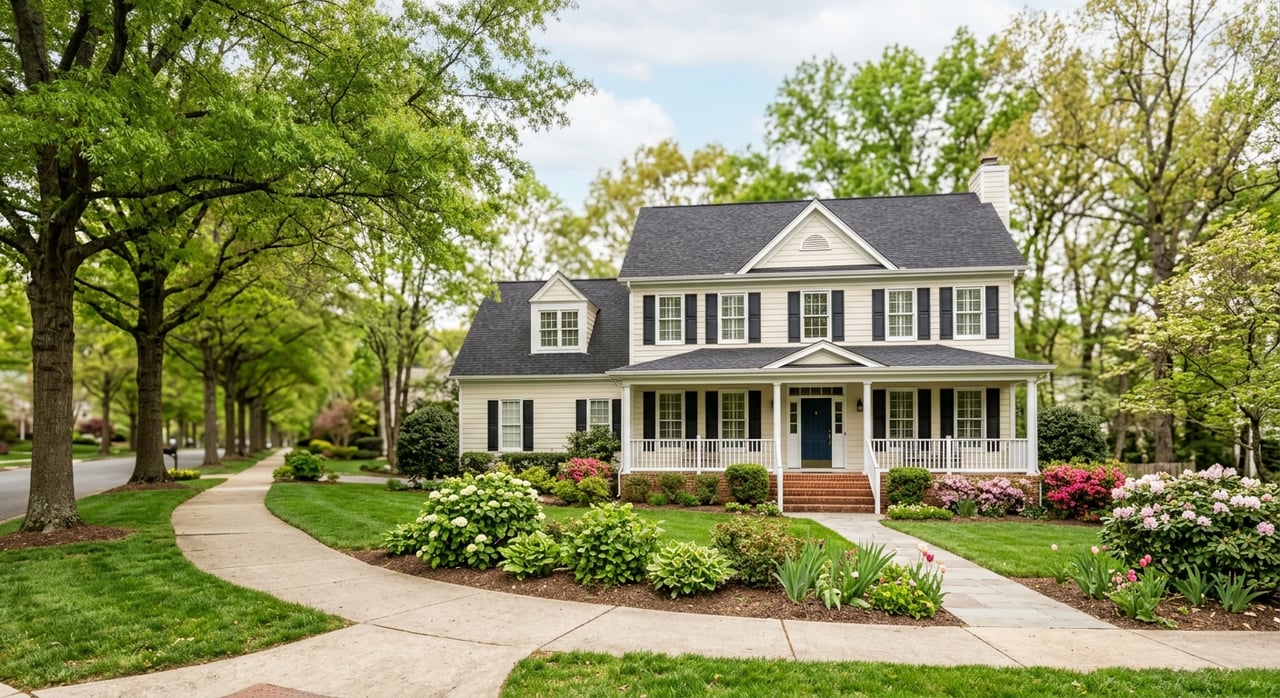
Baltimore County planning maps place New Town, Deer Park, Garrison, McDonogh, and Academy Lane within the broader Owings Mills area. These pockets are important to know if you want more traditional suburban housing patterns. They sit outside the station core, so they are better understood as residential areas with transit access nearby rather than fully walkable rail-first districts.
That distinction can help you narrow your home search. If you want a quieter residential setting and do not mind driving to the Metro or to shopping areas, these parts of Owings Mills may fit well. If you want to step out your door and have the station, shops, and services close together, the core areas will likely feel more aligned with your goals.
County planning also describes the Owings Mills growth area as having custom single-family homes, townhomes, condominiums, and apartments. That variety gives you more flexibility than you might expect. You can compare denser mixed-use housing near transit with lower-density neighborhoods farther out.
Housing Options in Owings Mills
Owings Mills offers a broad mix of housing types. County planning materials identify apartments, townhomes, condominiums, and single-family homes across the area. That range makes Owings Mills relevant for first-time buyers, move-up buyers, and people relocating who want options across different lifestyles.
Near Metro Centre and Foundry Row, the housing pattern tends to be more apartment-heavy and transit-oriented. In the broader residential pockets, you are more likely to find a suburban feel with lower density and a stronger need for a car. Neither setup is automatically better. It depends on how you want your days to work.
A helpful way to think about it is this:
- Want maximum convenience? Focus on the Metro Centre and Foundry Row corridor.
- Want a more traditional suburban setting? Explore neighborhoods outside the station core.
- Want flexibility in home type? Owings Mills offers everything from apartments to single-family homes.
Commuting and Park-and-Ride Options
One practical advantage in Owings Mills is that you are not limited to a single commute style. You can live near the Metro and use rail regularly, or you can drive to the station when that works better. MTA service alerts note free parking at Owings Mills station, which supports a park-and-ride routine.
That option matters for households with changing schedules. Some days, you may want a full rail commute. Other days, you may drive for errands, appointments, or a faster trip across the region. Owings Mills gives you room for both approaches.
Because the area is also tied into the I-795, MD 140, MD 129, and MD 130 network, road access remains a big part of life here. Transit is a real advantage, but this is still a suburban market where many households will continue using a car for at least part of the week.
Shopping, Services, and Everyday Convenience
A transit-friendly neighborhood works best when daily needs are close by. In Owings Mills, that is one of the biggest strengths of the station corridor. Metro Centre emphasizes shops, restaurants, apartment homes, and transit options, while Foundry Row adds another strong cluster of stores, services, dining, and groceries.
That mix can save time in ways that matter. When your grocery store, coffee stop, dining options, library, and transit are all in the same general area, you spend less energy coordinating every small task. For many buyers, that convenience is just as important as commute time.
If you are comparing Owings Mills to other suburban areas, this is one of the clearest reasons it stands out. It offers a more layered daily-life setup than a typical suburban station stop.
Outdoor Access Near Owings Mills
Transit convenience is only one part of choosing where to live. Recreation matters too, especially if you want nearby places to walk, unwind, or spend time outdoors. In the Owings Mills area, Soldiers Delight Natural Environment Area is a key local resource with trails and a visitor center.
Baltimore County’s regional parks map also places Northwest Regional Park in the Owings Mills region. These outdoor anchors add balance to an area that already offers strong shopping and commuter infrastructure. If you want a suburb that blends practical convenience with access to nature, Owings Mills checks several important boxes.
Who Owings Mills Metro Living Fits Best
Transit-friendly living in Owings Mills can work well for several types of buyers. If you are a first-time buyer or relocating professional, the station core may offer the easiest entry into a lower-maintenance lifestyle with nearby amenities. If you are balancing work trips into Baltimore with suburban preferences, the Metro corridor can support that mix.
For move-up buyers, the broader Owings Mills area may offer more traditional residential options while keeping transit nearby. The key is to be clear about your priorities. Do you want true walkability, easier commuting, more living space, or a combination of all three?
Owings Mills is strongest when you match the right pocket to the right lifestyle. The station core offers the most convenience. The surrounding neighborhoods offer more of the classic suburban experience.
If you are exploring Owings Mills and want help comparing transit-oriented options with more traditional neighborhood settings, Shelly German can help you sort through the details and find the right fit for your goals.
FAQs
Which part of Owings Mills is most walkable for daily life?
- Metro Centre and the Foundry Row corridor are the most walkable parts of Owings Mills because transit, apartments, shopping, dining, the library, and CCBC are clustered there.
Is there parking at the Owings Mills Metro Station for commuters?
- Yes. MTA service alerts note free parking at Owings Mills station, which makes park-and-ride commuting an option.
What types of homes can you find in Owings Mills?
- Owings Mills includes apartments, townhomes, condominiums, and single-family homes, with more transit-oriented housing concentrated near Metro Centre and Foundry Row.
Are all Owings Mills neighborhoods equally transit-friendly?
- No. The strongest transit-friendly living is in the station core, while many other Owings Mills neighborhoods are more suburban and may require driving for some daily needs.
What amenities are near the Owings Mills Metro area?
- The station corridor includes shops, restaurants, apartment communities, the Baltimore County Public Library, CCBC Owings Mills, and nearby access to larger retail areas like Foundry Row.
Are there outdoor recreation options near Owings Mills?
- Yes. Soldiers Delight Natural Environment Area has trails and a visitor center in Owings Mills, and Northwest Regional Park is also in the broader Owings Mills region.